
Autonomous Gaming Systems
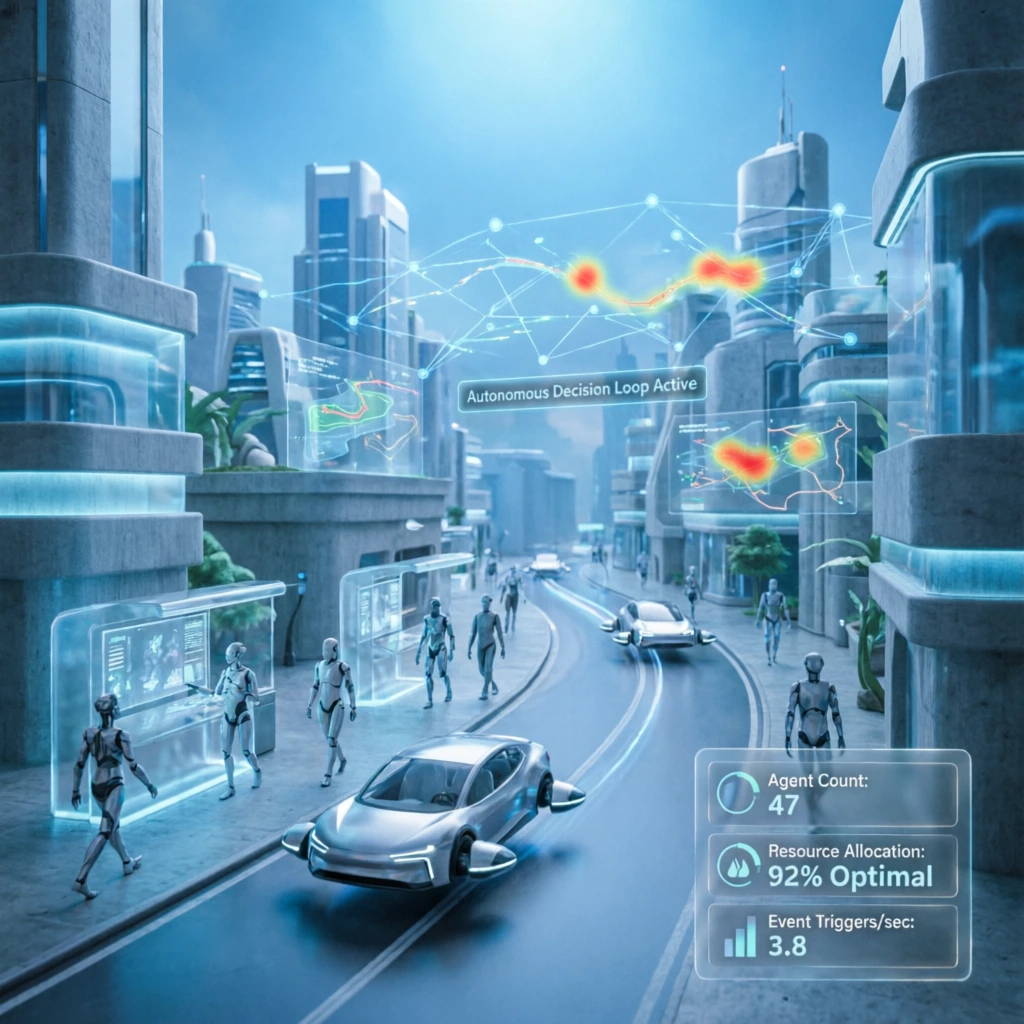
There’s something oddly captivating about watching a simulation run without you. I discovered this years ago with Dwarf Fortress, leaving the game running overnight and returning to find my fortress had experienced a goblin invasion, a cave in, and what the community affectionately calls a “tantrum spiral” that left half my dwarves dead. Nobody was playing. The simulation just happened.
That experience introduced me to autonomous simulation gaming systems a fascinating corner of game design where the player becomes observer as much as participant. These systems have evolved dramatically, and they’re reshaping how we think about interactive entertainment.
Understanding Autonomous Simulation Systems
At their core, autonomous simulation gaming systems are virtual environments capable of generating meaningful events, behaviors, and outcomes without continuous human input. Unlike traditional games that pause when you step away, these simulations continue operating, evolving, and producing emergent narratives independently.
The concept spans a spectrum. On one end, you have games with sophisticated background simulations that continue while players aren’t watching. On the other end, you find systems designed primarily for observation digital ant farms of extraordinary complexity where player intervention is optional or minimal.
What unites them is self sufficiency. These systems contain enough rules, agents, and interconnected mechanics that interesting things happen autonomously. They don’t wait for player input to create meaning.
The Architecture of Self Running Worlds

Building systems that function autonomously requires careful architectural decisions.
Agent Based Modeling
Most autonomous simulations populate their worlds with agents independent entities following their own behavioral rules. Each agent pursues goals, responds to environmental conditions, and interacts with other agents. A simulated city might contain thousands of agents representing citizens, each making decisions about employment, housing, relationships, and daily activities.
The magic emerges from interactions. No designer scripts what happens when a merchant agent’s business fails, forcing them to relocate, affecting their family relationships, and creating opportunities for other agents. These cascades occur naturally from interconnected rule systems.
Economic and Ecological Loops
Sustainable autonomous simulations require balanced feedback loops. Resources must flow through the system generated, consumed, and recycled without depleting or accumulating infinitely. Getting these loops right takes extensive testing and tuning. I’ve seen promising simulations collapse because one resource accumulation went unchecked, eventually breaking the entire economy.
Event Generation Systems
Beyond moment to moment agent behavior, autonomous simulations often include systems for generating larger scale events. Natural disasters, political upheavals, technological discoveries, cultural movements. These events inject variety and create historical texture that makes simulated worlds feel alive across longer timescales.
Notable Examples in Gaming
Several games have pushed autonomous simulation design forward.
Dwarf Fortress remains the gold standard. Its simulation runs continuously, modeling individual dwarf psychologies, material properties, fluid dynamics, combat physics, and historical events. Players can step away entirely and return to find their fortress transformed by events they never witnessed. The developers have spent over twenty years building systems that generate genuinely surprising emergent narratives.
Rimworld brings similar concepts to a more accessible package. Its colonist simulation continues during gameplay, with characters forming relationships, developing psychological conditions, and making decisions based on personality traits. The storyteller systems actively generate challenges and events to create dramatic arcs, even when players simply observe.
Crusader Kings III simulates medieval dynasties with remarkable depth. Characters pursue ambitions, form alliances, plot against rivals, and manage their domains autonomously. Players guide their own dynasty, but the world around them churns with independent activity wars starting, religions spreading, cultures evolving—whether players intervene or not.
Football Manager simulates entire football leagues with teams managed by autonomous systems. Rival managers make transfer decisions, develop tactics, and respond to match situations without player involvement. The simulation world continues even for teams the player never directly observes.
Applications Beyond Entertainment
The techniques developed for gaming have found applications elsewhere.
Urban planners use autonomous simulations to model traffic patterns, population movement, and infrastructure stress. By letting systems run autonomously across simulated decades, they can observe emergent problems before building real infrastructure.
Epidemiologists employed similar systems during recent health crises, modeling disease spread through populations of autonomous agents with realistic behavior patterns. These simulations helped inform policy decisions by showing how interventions might cascade through complex social systems.
Military strategists use autonomous wargaming systems to explore conflict scenarios without predetermined outcomes. Running thousands of simulations with varying parameters reveals strategic vulnerabilities that scripted exercises might miss.
Training systems for emergency responders incorporate autonomous simulations where disaster scenarios unfold dynamically. Trainees can’t memorize responses because each simulation develops differently based on their decisions and autonomous system behavior.
The Observer Experience
Playing or perhaps watching autonomous simulations creates a distinct experience. There’s something contemplative about it. You become invested in outcomes you can’t fully control. You develop attachment to agents you’ve never directly commanded. You witness stories that nobody authored.
I’ve found myself genuinely mourning simulated characters who died while I was away from the keyboard. Their stories continued without me, and some of those stories ended badly. That emotional response speaks to how effectively these systems can create meaning without traditional narrative design.
Some players find this frustrating. They want direct control, clear objectives, and responsive systems. Autonomous simulations offer something different participation in ongoing processes rather than domination over static stages. It’s not for everyone, and that’s perfectly reasonable.
Challenges Worth Acknowledging
Creating compelling autonomous simulations presents substantial difficulties.
Pacing control is notoriously tricky. Autonomous systems generate events according to their own logic, which may not align with satisfying dramatic timing. Some sessions produce nothing interesting. Others overwhelm with simultaneous crises. Balancing event generation without making it feel artificial requires constant iteration.
Observation tools matter enormously. If players can’t effectively monitor what’s happening across complex simulations, autonomous events become meaningless noise. The best implementations provide layered observation systems summaries for quick orientation, detailed logs for investigation, and visualization tools for pattern recognition.
Performance limitations constrain simulation depth. Running thousands of autonomous agents with sophisticated decision making requires computational resources. Developers constantly balance agent complexity against population size against simulation speed.
There’s also the existential question of whether simulations without players constitute games at all. Some argue they’re closer to elaborate screen savers or digital toys. I’d counter that observation and occasional intervention create legitimate interactive experiences just not traditional ones.
Looking Ahead
The future of autonomous simulation gaming looks promising. Improved hardware enables more complex agent behaviors and larger populations. Machine learning techniques allow agents to develop more sophisticated and unpredictable strategies. Cross-pollination with research simulations brings new methodological rigor to game design.
What excites me most is the narrative potential. Autonomous simulations generate stories that surprise even their creators. As these systems mature, they’ll produce increasingly sophisticated emergent narratives not replacing authored storytelling but offering something complementary.
We’re still learning what becomes possible when we give virtual worlds enough complexity to develop on their own.
Frequently Asked Questions
What are autonomous simulation gaming systems?
Game environments capable of generating meaningful events, behaviors, and outcomes without continuous human input, functioning independently while creating emergent narratives.
How do these systems differ from regular games?
Traditional games pause or wait for player input. Autonomous simulations continue running, evolving, and producing events whether players actively engage or not.
What games best demonstrate autonomous simulation?
Dwarf Fortress, Rimworld, Crusader Kings III, and Football Manager all feature sophisticated autonomous simulation elements.
Do players actually enjoy watching games play themselves?
Many players find observing emergent narratives compelling, though the experience differs significantly from traditional goal-oriented gaming. It’s not universally appealing.
Are there practical applications beyond gaming?
Yes, including urban planning, epidemiology, military strategy, and emergency response training, all utilizing autonomous simulation techniques.
What makes designing these systems difficult?
Challenges include balancing feedback loops, controlling pacing, providing effective observation tools, managing performance demands, and creating genuinely interesting emergent outcomes.